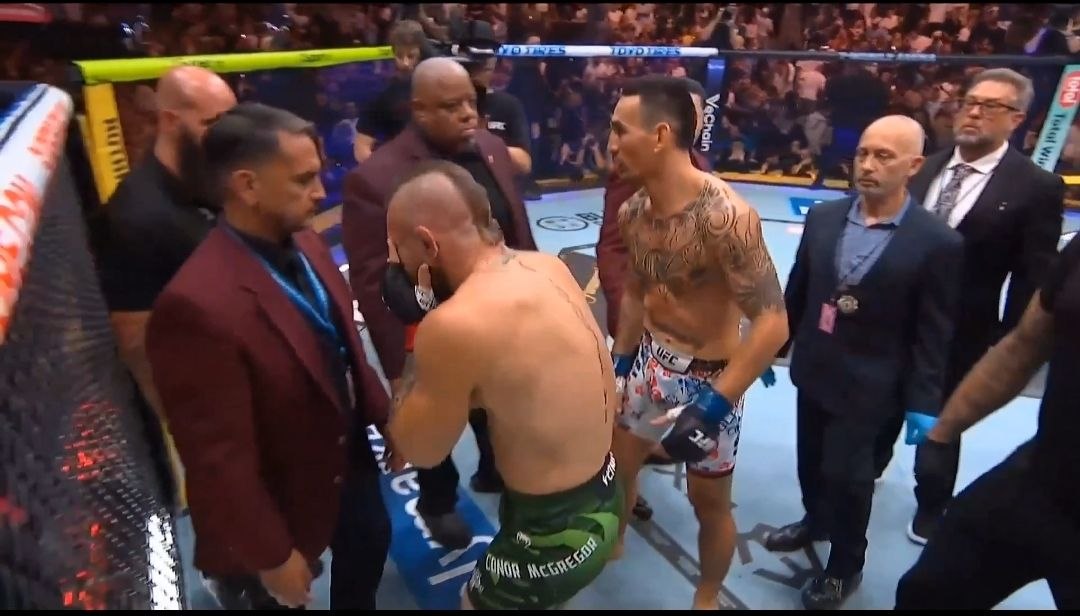
Sixty-nine seconds. That is how long Conor McGregor's return lasted. Five years of buildup, five years of recovery, five years of waiting, and the whole thing ended in less time than it takes to boil an egg. A jumping roundhouse kick. A bad landing. A blown knee. And then it was over.
Now we are left with the question that nobody wants to ask and nobody can answer: was that the last time we see Conor McGregor in the Octagon? He says no. He announced surgery, recovery, and a plan to fulfill his final UFC fight. But fighters say a lot of things in the immediate aftermath of defeat. Adrenaline talks. Emotion talks. Reality has a way of arriving later, in the quiet months of rehabilitation, when the cameras are gone and the only sound is the grind of physical therapy.
The history is not encouraging. McGregor broke his left leg in 2021. He returned five years later and blew his right knee. Both legs have now suffered catastrophic injuries. He is about to turn 38. The body that made him a superstar is sending a message, and the message is clear: this is not sustainable.
There is also the question of what a return would even look like. McGregor has one fight left on his contract. The UFC will want it to be big. Holloway wants the trilogy. But Holloway is also a fighter who just won by injury and is hungry for real competition. He may not wait. The UFC may not wait. The window is closing, and the window was never wide to begin with.
And yet, there is the stubbornness. The faith. The belief. McGregor's statement was filled with religious language, with conviction, with the certainty of a man who believes the universe owes him one more night. That belief has carried him before. It carried him from Dublin to the UFC. It carried him to two belts. It carried him back from a broken leg. Maybe it carries him back one more time.
But maybe it does not. Maybe this is where the story ends. Not with a knockout. Not with a raise of the hand. Not with a microphone in his face and a crowd chanting his name. But with a man on a stretcher, refusing crutches, limping into the dark. That would be a tragedy. But combat sports is full of tragedies. It is a sport that promises glory and often delivers pain.
At KORUSH, we do not have the answer. Nobody does. Not Dana White. Not McGregor. Not the doctors who will read his MRI. The only thing we know is that on July 11, 2026, Conor McGregor stepped into the Octagon for the first time in five years, and 69 seconds later, he left it. Whether he ever comes back is a question only time can answer. And time, in this sport, is not kind.