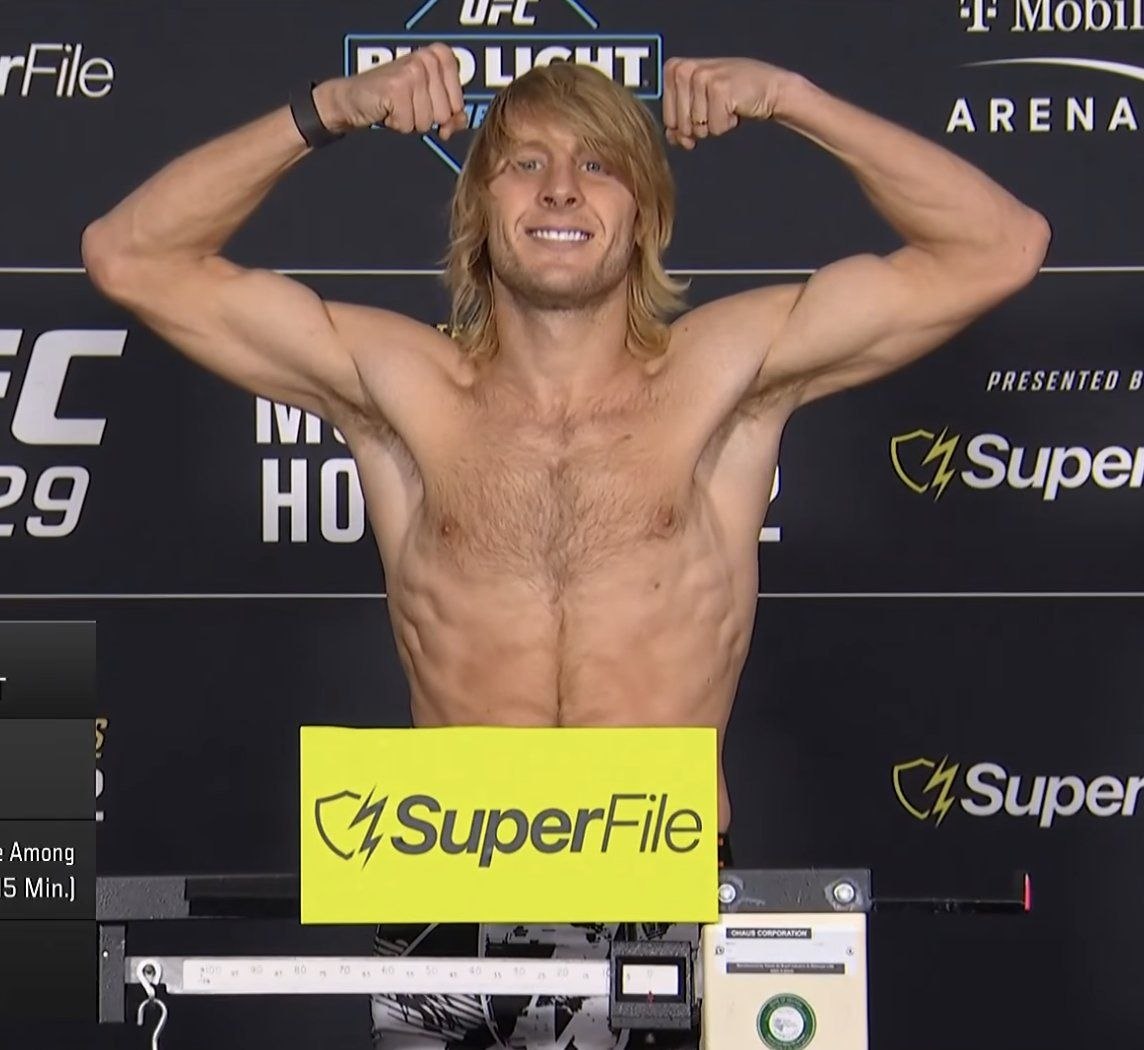
Fifty-four pounds. That is what Paddy Pimblett had to lose to step on the scale at 155 for UFC 329. He walked around at 210 after his first career loss to Justin Gaethje. Then he spent weeks cutting back down to lightweight. Fifty-four pounds is not a weight cut. It is a transformation. It is a punishment. It is a bet with your own body that it will hold together for fifteen minutes in the Octagon.
We need to talk about what this actually means. Fifty-four pounds is roughly 24 kilograms. That is the weight of a large sack of cement. Paddy carried that weight on his frame, gained it after the Gaethje loss, and then systematically starved and dehydrated himself to remove it. Every fighter cuts weight. But not every fighter cuts 54 pounds.
The Pimblett we saw against Gaethje was big. He looked like a natural welterweight fighting at lightweight. He was strong, durable, and aggressive. He lost, but he showed he belonged. The question now is: which version of Paddy shows up tomorrow? The big, durable version that fought Gaethje? Or the depleted, drained version that has to recover from a 54-pound cut?
Weight cutting is the dirty secret of combat sports. Everyone does it. Nobody talks about it. Fighters walk around 20, 30, sometimes 40 pounds above their division. They dehydrate, they sauna, they restrict. They step on the scale looking like skeletons. Then they rehydrate and fight 24 hours later. It is legal, it is dangerous, and it is the reality of the sport.
Paddy's cut is extreme, but it is also a statement. He could have stayed at welterweight. He could have fought bigger men at 170 and avoided this ordeal. But he chose to go back to 155. Why? Because lightweight is where Paddy Pimblett made his name. Because the division is wide open. Because pride is a powerful drug, and Paddy has too much of it.
The risk is real. A bad cut can ruin a fight before it starts. We have seen fighters gas out in the first round. We have seen fighters pull out the day of the event. We have seen fighters hospitalized. Paddy is young, resilient, and has done this before, but 54 pounds is a number that demands respect and caution.
At KORUSH, we are not here to tell fighters how to live. But we are here to say: this is the reality of the sport we love. Behind every weigh-in photo, there is a story of sacrifice. Behind every fist thrown tomorrow, there is a body that was pushed to its limit just to be there. Paddy Pimblett on that scale is not just a fighter making weight. He is a man who bet everything on himself. We will see if the bet pays off.