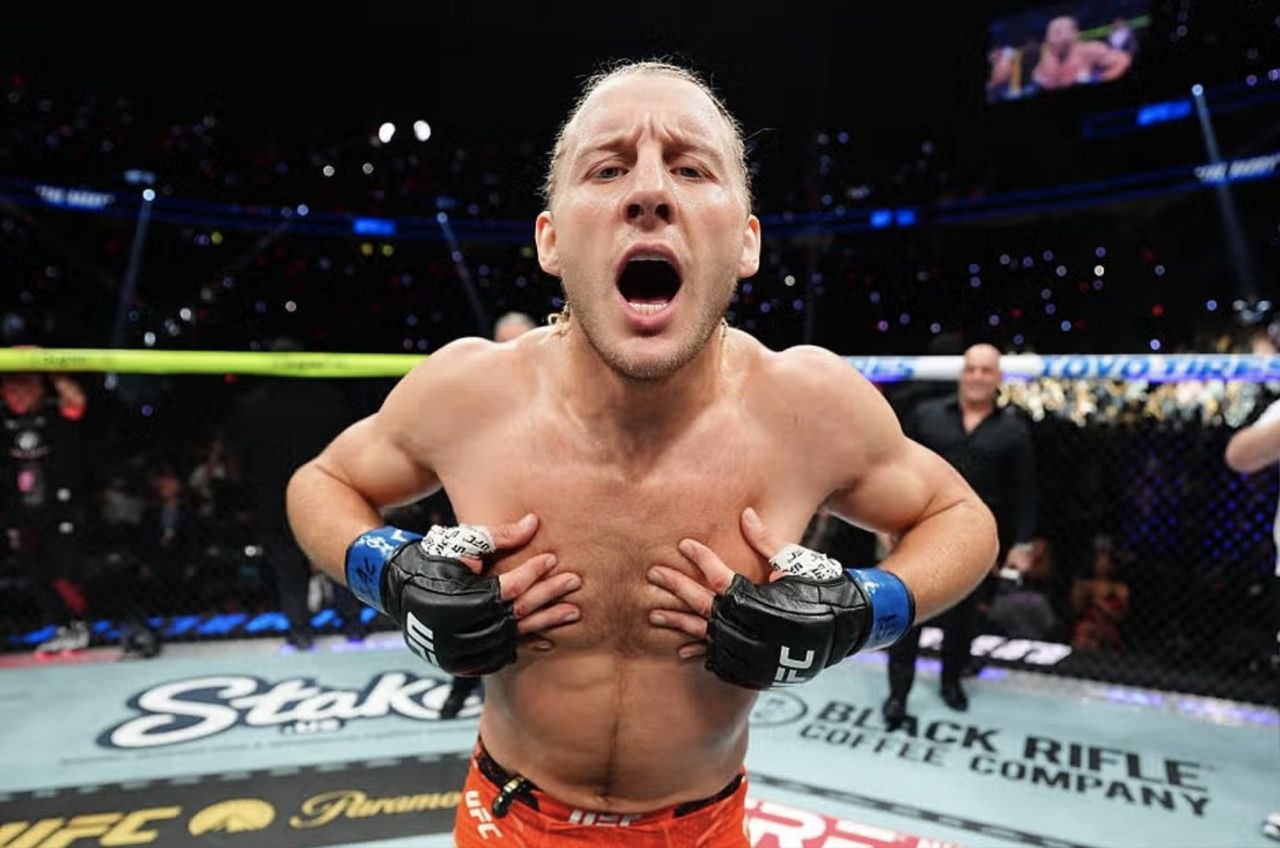
Paddy Pimblett had the night of his life and then watched someone else's night end. In 52 seconds, he put Benoit Saint Denis to sleep with a D'arce choke. It was the most impressive win of his career. Then, minutes later, he watched Conor McGregor's comeback end in injury. Two moments. Two emotions. One Paddy.
First, the celebration. The submission was surgical. Saint Denis is a dangerous grappler, and Pimblett walked into his world and beat him there. The D'arce choke was tight, fast, and ruthless. No panic. No scramble. Just technique. This was the version of Paddy that the UFC has been waiting for. The version that justifies the hype.
Then, the callout. Pimblett did not hesitate. He took the microphone and called for a title shot. Ilia Topuria. The lightweight championship. The biggest fight possible. Some will say it is too soon. Some will say Paddy has not earned it. But Paddy does not care. He sees the opportunity, and he is taking it. That is the Baddy way.
And then came the reaction to McGregor. Paddy is not McGregor's friend. He is not his ally. The two have history, and not all of it is friendly. But when McGregor's knee gave out, Paddy's face told a different story. There was shock. There was respect. There was the recognition that what happened to McGregor could happen to anyone. In that moment, Paddy was not a rival. He was a fighter watching another fighter fall.
At KORUSH, we saw something real in that duality. The sport of MMA is built on these contradictions. You celebrate your win and mourn someone else's loss. You call for the biggest fight possible and then watch the biggest star crumble. Paddy Pimblett lived both sides of the sport in one night. He was the winner and the witness. The future and the present. The hype and the humanity.